


Ragdoll Fall: Break the Bones!
3.8269.00 Reviews
App Specs
- Version
- 0.1.677
- Updated On
- License
- Free
- Downloads
- 10,000,000+
- Developer
- CASUAL AZUR GAMES
- Categories
- Simulation
- Platform
- Android, iOS
Screenshots
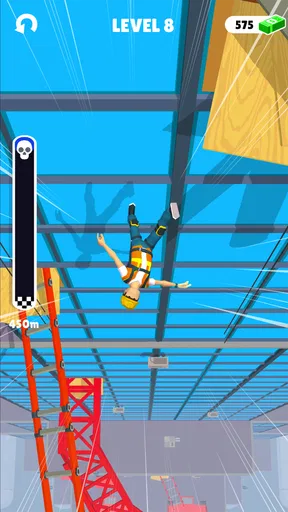
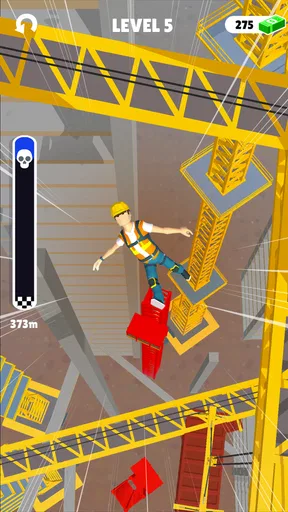
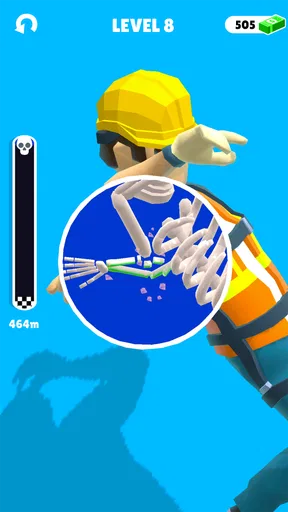
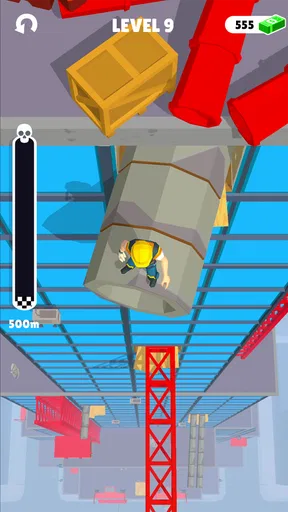
 Analysis by AppCompare
Ragdoll Fall: Break the Bones! is the kind of mobile game I open when I want a quick laugh rather than a serious challenge. Its central idea is simple: send a ragdoll through a fall, watch the physics unfold, and enjoy the absurd result. That simplicity is also the reason it works so well in short sessions and the reason it may lose its appeal for players looking for deep progression or a more demanding simulation.
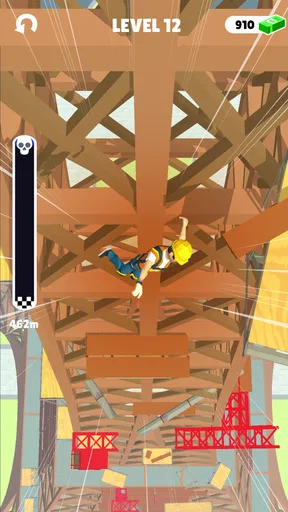
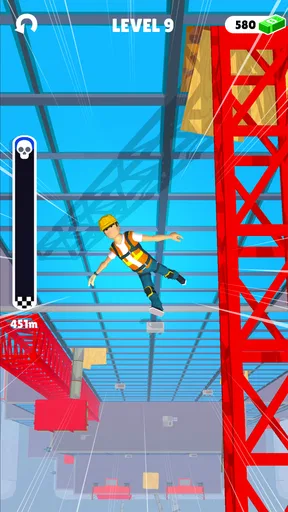
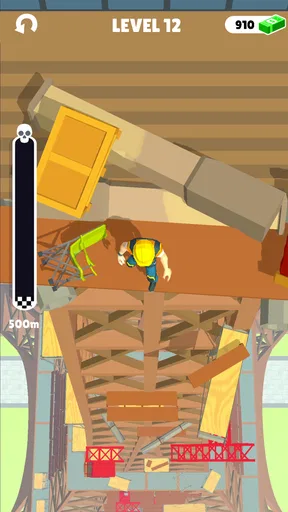
Developed by CASUAL AZUR GAMES, this free simulation game turns slapstick physics into its main attraction. I found the experience easiest to appreciate when treated as a compact arcade toy: make a choice, trigger the fall, observe the impact, and try again. It is not trying to replace a detailed physics sandbox or a traditional action game. Instead, it focuses on the immediate visual joke of a character tumbling through a dangerous-looking situation.
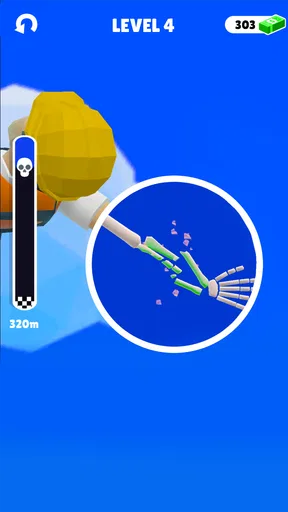
The game is aimed at Teen players, and that rating matters because the humor revolves around fictional injuries and exaggerated bone-breaking imagery. Nothing about the presentation needs to be taken seriously, but the theme will not suit everyone. If you enjoy cartoonish physical comedy, the premise is easy to understand within seconds. If the idea of watching a ragdoll get hurt is unpleasant, the entire appeal disappears before the first session is over.
How the falling gameplay holds up in everyday use
I look at the everyday appeal of the falling gameplay through a practical lens: what makes a short session feel worthwhile, and when does the same loop start to feel familiar? I’ll also consider how small changes in setup can make an attempt more interesting, before turning to the kinds of players and alternatives that may fit better.
A clear idea that needs almost no explanation
The strongest part of the game is its immediate readability. I never had to spend a long time learning a complicated control scheme or remembering a large collection of rules. The objective is communicated through the fall itself: position the character or set up the situation, then see how the body reacts when gravity takes over. That makes it approachable for someone who wants entertainment without a tutorial-heavy introduction.
This also makes it a practical choice for small gaps in the day. I can imagine playing it while waiting for food, taking a short break from work, or sitting on public transport. A session does not require the same mental commitment as a long strategy game, and the visual outcome arrives quickly. The best moments come when the ragdoll moves in an unexpectedly awkward way, turning a basic attempt into a funny little physics accident.
There is a useful distinction between playing for success and playing for spectacle. Some players will focus on reaching the most damaging landing or completing the immediate objective. I preferred paying attention to how different approaches changed the fall. A slightly different starting position, angle, or timing can make the result feel noticeably different, so experimenting is more rewarding than repeating one action without thinking.
Worth Reading Before You Choose

EA SPORTS FC Mobile 26 Is a Bigger Football Game, but It Takes Time

Flipboard Shows What News Apps Must Do Beyond the Feed

Switching to Android Auto Means Rethinking Your Driving Routine

Google Calendar Makes a Crowded Week Easier to Manage

Ludo King Makes the Most of the Minutes Between Plans

Baby Panda World Brings Quick Play to Modern Phones, but Its Game Library Feels Busy
Why the physics provide the real entertainment
In many simulation games, the appeal comes from managing a system over time. Here, the system is much smaller, but it is visible. The ragdoll’s loose movement gives every attempt a little uncertainty. Even when I expected the general result, the exact tumble could still be amusing because the body did not behave like a stiff animated character.
That unpredictability is the game’s best source of replay value. I was not returning because the story demanded it or because I needed to master a complex combat system. I returned to see whether another attempt would produce a more dramatic or ridiculous outcome. This is a narrow form of replayability, but it fits the game’s purpose well.
A useful way to play is to treat each attempt as a small experiment. Instead of immediately repeating the same input, I would change one element at a time and watch the result. That approach makes the physics easier to read and helps prevent the game from feeling like random tapping. It also creates a modest sense of control: the outcome may be chaotic, but the setup still matters.
The game’s strongest use case is short, casual play
For me, the ideal scenario is a ten-minute break when I want something visual and silly. I can start playing without preparing a long-term plan, enjoy several falls, and put the phone away without feeling that I have abandoned a larger task. That low commitment is a genuine strength, especially for people who do not want every mobile game to become a daily obligation.
It can also work as a light shared experience. Showing someone an especially ridiculous fall is more natural than explaining a complicated game system. The humor is immediate, and a friend can understand what is happening by watching one attempt. I would not describe it as a full multiplayer social game, but its visual reactions make it easy to pass around informally.
The game has reached more than ten million installs, which suggests that its straightforward concept has found a broad mobile audience. Its average rating is 3.8 from around ten thousand ratings, a result I consider consistent with a game that delivers a clear joke but may not satisfy everyone for long sessions. The appeal is easy to grasp, while the limited scope means personal tolerance for repetition will strongly affect enjoyment.
What I would change in my playing routine
One mistake is expecting every round to feel like a carefully designed puzzle. The better mindset is to alternate between purposeful attempts and playful testing. When I wanted a target, I focused on making the fall work. When the result became predictable, I changed my approach simply to create a different animation. This small shift kept the game from feeling like a checklist.
I also found it better to stop after the humor started becoming familiar. Because the game’s main pleasure comes from watching physical reactions, playing continuously for too long can expose the narrowness of the formula. Ending a session while the falls are still amusing makes it easier to return later. This is not a title I would recommend grinding for hours; it is more effective in compact bursts.
Another practical consideration is the audience around you. The Teen rating reflects the injury-themed comedy, so I would not automatically hand it to a young child just because the characters look cartoonish. The presentation is playful, but the subject is still fictional bodily harm. Parents and caregivers should decide whether that style of humor is appropriate for the person using the device.
Where it differs from other simulation games
Compared with management simulations, this game removes nearly all the slow planning that usually defines the category. There is no need to build an economy, organize a city, maintain a business, or balance a large set of resources. That makes it much more accessible, but it also means there is less to think about between attempts.
Compared with physics sandboxes, it is more focused and less open-ended. A sandbox normally gives players room to construct elaborate experiments, while this game directs attention toward the fall and its comic consequences. I see that as both a strength and a limitation. The focused design makes the first minutes enjoyable, but players who want to create their own complex scenarios may eventually prefer a broader physics tool.
It also differs from conventional arcade games because the reward is not only a score or a fast completion time. The animation itself is part of the payoff. That gives the game a relaxed tone, although it may frustrate players who need a strong sense of mastery. If your favorite mobile experiences are competitive runners, precision platformers, or deep simulation managers, this may feel too passive and too dependent on spectacle.
The main weakness: novelty can fade quickly
The meaningful limitation is the narrowness of the central loop. Falling, colliding, and watching the ragdoll react can be funny, but those ingredients cannot carry every kind of player indefinitely. Once I understood the basic rhythm, the question became whether I still enjoyed seeing another variation of the same physical joke.
This is where expectations matter. The game should not be judged as though it were a full-scale simulation with a detailed career mode. Its modest goal is to provide quick, exaggerated amusement. Still, even within that goal, some players will want more variety in objectives, more reasons to return, or a stronger sense that their skill is improving. Those players may find the experience repetitive sooner than casual users do.
The physics can also feel less satisfying when the outcome seems driven more by the animation than by a clear decision. Unpredictability is entertaining when it creates a surprise, but it becomes frustrating when I cannot tell why one attempt worked better than another. I recommend paying attention to positioning and timing, but I would not expect the precision of a dedicated physics puzzle game.
Because the game is free, it is easy to try without making a financial commitment. That lowers the risk for curious players, but it does not remove the time trade-off. A free download is still not worthwhile if the central joke does not appeal to you. I would make the decision based on your appetite for short physics comedy rather than on the size of its audience.
Who should install it, and who should skip it
I would recommend it to players who enjoy ragdoll humor, quick arcade-style experiments, and games that can be understood immediately. It is particularly suitable for someone who wants a casual distraction without a long story, a complicated control system, or a demanding daily routine. The low barrier to entry is its biggest practical advantage.
It is also a good fit for people who enjoy observing systems rather than perfecting them. If you like changing one variable, watching the result, and laughing when the physics produce something unexpected, the game has a pleasant experimental quality. You do not need expert reflexes to appreciate its best moments.
I would skip it if you want a substantial simulation with detailed management, realistic physics, or a long-term progression structure. I would also avoid it if injury-based slapstick is not your kind of humor. Players who need competitive rankings, elaborate customization, or a strong narrative may be happier with a different genre entirely.
On Android, the game requires at least version 6.0 of the operating system, so it remains accessible to many older compatible devices. The current version is 0.1.677, and the title is free to play. Those details make it relatively easy to test, but device compatibility alone should not be mistaken for a guarantee that every person will enjoy the repetitive physics loop.
My final view after spending time with it
The right way to judge Ragdoll Fall: Break the Bones! is as a compact physics-comedy game, not as a complete simulation world. In that role, it succeeds more often than it fails. The controls and premise are approachable, the ragdoll reactions provide immediate visual amusement, and short sessions fit naturally into everyday phone use.
Its weakness is equally clear: the same focused design that makes the first attempts accessible can limit its staying power. I would not recommend installing it for a long-term challenge or for a richly layered simulation experience. I would recommend it to a Teen player who wants a free, uncomplicated way to watch exaggerated falls and experiment with physical outcomes.
CASUAL AZUR GAMES has built the experience around a single recognizable joke, and the game is at its best when that joke still feels surprising. My advice is to try it in short sessions, vary your approach instead of tapping through mechanically, and stop when the falls begin to feel interchangeable. For the right audience, that is enough: a quick, silly distraction with a clear identity rather than a game pretending to offer more depth than it has.
Overall, I see it as an easy recommendation for casual ragdoll fans and a cautious one for everyone else. The free entry point makes experimentation simple, while the Teen content rating and limited core loop define its boundaries. If those boundaries match what you want from a mobile game, the physics can provide several genuinely funny moments. If you are searching for lasting progression or serious simulation, another option will serve you better.
Pros
- Simple controls make it easy to start playing immediately.
- Physics-based crashes create unpredictable and entertaining results.
- Short levels are well suited for quick gaming sessions.
- Unlockable characters and items add some progression.
- Works well as a casual stress-relief game.
Cons
- Gameplay can become repetitive after only a few rounds.
- Ads may interrupt the experience
- especially between levels.
- Limited control over the ragdoll can make outcomes feel random.
- Some unlocks may require considerable time or repeated play.
- The cartoon injury theme may not appeal to younger players.
FAQs for Ragdoll Fall: Break the Bones!
What is Ragdoll Fall: Break the Bones!?
Ragdoll Fall: Break the Bones! is a physics-based casual game built around controlling a flexible ragdoll as it falls through obstacle-filled levels. The main objective is to guide the character into awkward landings and collisions while causing as much damage as possible. Its simple controls make it easy to start, but timing, positioning, and understanding the level layout are important for achieving better results.
How do you play Ragdoll Fall: Break the Bones!?
Gameplay is generally based on controlling the ragdoll’s movement and release at the right moment so it hits platforms, walls, traps, and other objects during the fall. Each stage encourages experimentation because small changes in timing can produce completely different results. The controls are designed for quick sessions, making the game suitable for casual play, although some levels may require several attempts to master.
Is Ragdoll Fall: Break the Bones! free to download and play?
Ragdoll Fall: Break the Bones! can typically be downloaded free of charge, allowing players to try the core gameplay without an upfront purchase. However, free mobile games may include advertising, optional in-app purchases, or both. Before downloading, it is worth checking the current store listing for details about ads, paid items, available subscriptions, and whether an internet connection is needed for certain features.
Is Ragdoll Fall: Break the Bones! suitable for children?
The game uses exaggerated cartoon-style ragdoll physics rather than realistic injury graphics, but its central objective involves causing impact and breaking bones. Parents should consider whether that type of slapstick violence is appropriate for their child. It is also advisable to review the game’s age rating, advertising content, privacy information, and in-app purchase settings before allowing younger players to install or play it.
Does Ragdoll Fall: Break the Bones! require an internet connection?
The basic levels of a physics-based game like Ragdoll Fall: Break the Bones! may be playable offline, which is useful for short sessions while travelling or when mobile data is unavailable. Nevertheless, advertisements, updates, analytics, cloud features, or other online services may require connectivity. For the most accurate information, check the latest Android or iOS store description and test the game after temporarily disabling your connection.


